
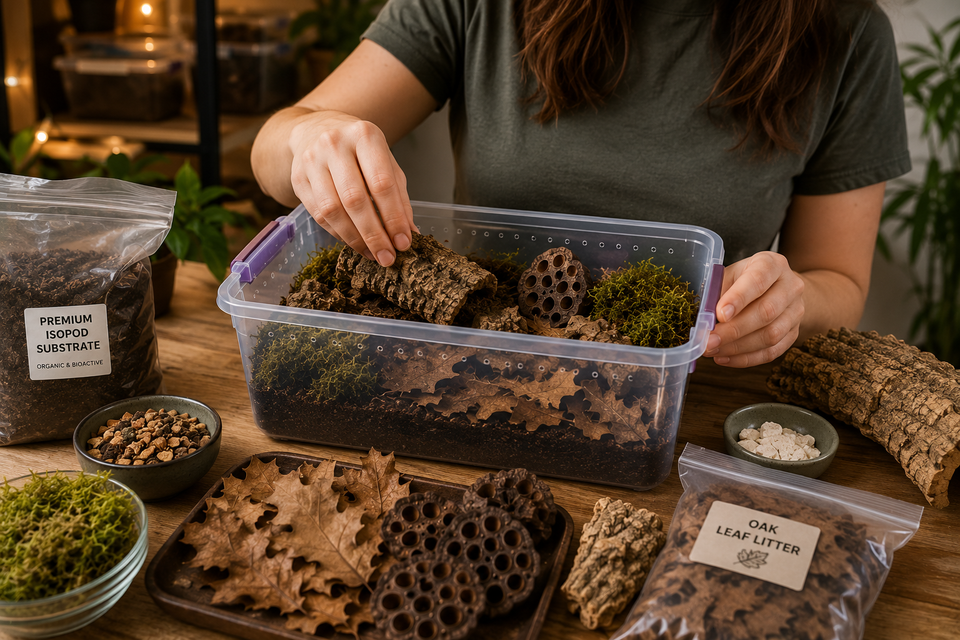
How to Set Up a Healthy Isopod Habitat: Essential Isopod Habitat Supplies
June 26, 2026
Creating a healthy isopod habitat starts with using the right isopod habitat supplies. Whether you're keeping isopods as pets, breeding colonies, or building a bioactive terrarium, having quality substrate, leaf litter, botanicals, and hides will help your isopods thrive.A successful habitat doesn't have to be complicated. With the right isopod supplies, you can create a natural environment that encourages burrowing, foraging, breeding, and healthy colony growth.
Choose the Right Isopod Enclosure
Every successful habitat begins with a suitable enclosure. Plastic bins, terrariums, and ventilated starter containers all work well as long as they maintain humidity while allowing adequate airflow.
A 16-quart isopod starter habitat provides plenty of room for substrate, cork bark, botanicals, moss, and leaf litter while making it easy to monitor your colony. Choose an enclosure with secure ventilation, a tight-fitting lid, and enough depth for burrowing.
Start with High-Quality Isopod Substrate
One of the most important isopod habitat supplies is quality substrate. Isopods spend much of their lives burrowing through the substrate where they molt, reproduce, and search for food.
A premium substrate should:
• Hold moisture without becoming waterlogged
• Contain decayed hardwood materials
• Include organic matter that supports beneficial microorganisms
• Provide nutrients for long-term colony health
Using a nutrient-rich substrate helps create a stable bioactive environment while reducing maintenance over time.
Create a Proper Moisture Gradient
Isopods require both humid and dry areas within their enclosure. This moisture gradient allows them to regulate hydration naturally.
Keep one side of the enclosure consistently moist using damp sphagnum moss while allowing the opposite side to remain slightly drier. Proper ventilation helps prevent stagnant air and excessive mold growth.
Maintaining this balance is one of the easiest ways to support healthy molts, breeding, and active colonies.
Add Leaf Litter for Food and Shelter
Leaf litter is one of the most valuable isopod habitat supplies you can provide.
Oak leaves and other hardwood leaf litter serve multiple purposes:
• Natural food source
• Shelter and hiding places
• Moisture retention
• Surface for beneficial microorganisms
A generous layer of leaf litter encourages natural foraging behavior while continuously feeding your colony.
Use Botanicals to Create a Natural Habitat
Adding botanicals transforms a basic enclosure into a natural environment.
Popular isopod habitat botanicals include:
• Lotus seed pods
• Magnolia pods
• Cork bark
• Seed pods
• Hardwood bark
• Moss
These materials create climbing areas, hiding spots, feeding surfaces, and visual enrichment while giving your enclosure a more natural appearance.
Provide Plenty of Hides
Isopods feel safest when they have numerous hiding places.
Cork bark remains one of the best isopod habitat supplies because it:
• Creates shaded retreats
• Holds moisture naturally
• Resists mold
• Lasts for years
Additional shelter can be created using botanicals, moss, bark, and leaf litter to encourage natural behaviors and reduce stress.
Don't Forget Calcium
Healthy molts depend on calcium.
Many keepers add:
• Cuttlebone
• Limestone
• Crushed eggshell
• Calcium supplements designed for isopods
Keeping a constant calcium source available helps support strong exoskeleton development and colony reproduction.
Feed Supplemental Foods Sparingly
While isopods primarily feed on decomposing organic matter, occasional supplemental foods help provide additional nutrition.
Popular options include:
• Dried shrimp
• Fish flakes
• Vegetables
• Specialized isopod diets
Only offer small amounts and remove uneaten food before it spoils.
Maintain Your Habitat
Regular maintenance keeps your habitat healthy.
Check routinely for:
• Proper moisture levels
• Healthy substrate
• Mold development
• Uneaten food
• Active isopods
• New mancae (baby isopods)
A healthy enclosure should smell earthy, remain clean, and show signs of active feeding and breeding.
Give Your Colony Time
New colonies often spend several weeks settling into their environment. During this time, avoid disturbing the enclosure more than necessary.
As the habitat matures, your isopods will become more active, reproduce regularly, and establish a thriving colony.
Shop Premium Isopod Habitat Supplies at Isopod B&B
Whether you're building your first enclosure or upgrading an established colony, Isopod B&B has everything you need to create a thriving habitat.
Our collection of premium isopod habitat supplies includes:
• Premium isopod substrate
• Oak leaf litter
• Cork bark
• Lotus seed pods
• Botanicals and dry goods
• Sphagnum moss
• Habitat starter kits
• Isopod enclosure supplies
We carefully select products that help hobbyists, breeders, reptile keepers, and bioactive enthusiasts build healthier, more natural environments.
Browse our online store today to find high-quality isopod habitat supplies delivered directly to your door and give your colony everything it needs to grow and thrive.