
August 1, 2026
Why Botanicals Matter in a Bioactive Terrarium
Botanicals are one of the most important parts of a healthy bioactive terrarium. While they add a natural look to the enclosure, their purpose goes far beyond decoration. Leaves, pods, bark, and other natural materials help create a more functional habitat by providing food, shelter, surface area, and enrichment for isopods, springtails, and other cleanup crew organisms.
For isopod keepers, botanicals help support the natural behaviors that keep a colony active and healthy. Isopods spend much of their time hiding, foraging, and breaking down organic matter, and botanicals give them the materials they need to do those things in a more natural way.
While supplemental foods can be offered, botanicals help provide a steady background food source inside the enclosure. This is especially useful for growing colonies because it gives isopods something to forage on between feedings.
A bioactive terrarium with no cover can feel too bare for isopods and may limit their activity. Adding layers of botanicals gives the enclosure more depth and helps your cleanup crew settle into the habitat more comfortably.
As botanicals slowly break down, they also create changing foraging opportunities. Isopods will gather around leaves, pods, and softening organic material, helping them stay active while contributing to the bioactive cycle inside the terrarium.
As botanicals decompose, they help feed microorganisms, fungi, springtails, and isopods. This creates a more complete habitat that functions more like a miniature ecosystem instead of a simple enclosure.
Different botanicals also help break up the enclosure into areas with slightly different conditions. This gives your isopods the ability to choose where they feel most comfortable, which is important for hydration, molting, and overall colony health.
For display terrariums, botanicals can make the habitat look more polished while still serving a practical purpose. They help create a natural forest-floor style environment that benefits both the animals inside and the overall design of the setup.
When choosing botanicals, it is important to use safe, clean materials intended for terrarium or isopod use. Avoid collecting random outdoor materials unless you know they are safe and properly prepared, since untreated items may contain pesticides, pests, mold, or contaminants.
Check your enclosure regularly and add more botanicals as needed. If leaf litter is disappearing quickly or your colony is growing, replenishing dry goods can help keep the habitat balanced and give your isopods enough material to forage and hide.
Isopod B&B offers isopod supplies, botanical dry goods, substrate, starter packs, and habitat essentials for keepers who want to build better bioactive enclosures. Explore our online shop to find natural supplies that help your isopods forage, hide, and thrive.
For isopod keepers, botanicals help support the natural behaviors that keep a colony active and healthy. Isopods spend much of their time hiding, foraging, and breaking down organic matter, and botanicals give them the materials they need to do those things in a more natural way.
Botanicals Provide Natural Food Sources
In the wild, isopods feed on decaying leaves, wood, and organic material. In a bioactive terrarium, botanicals help recreate that natural food source by giving isopods material to graze on and slowly break down over time. Leaf litter, seed pods, and other dry goods can become part of the colony’s regular feeding routine.While supplemental foods can be offered, botanicals help provide a steady background food source inside the enclosure. This is especially useful for growing colonies because it gives isopods something to forage on between feedings.
They Create Hiding Places
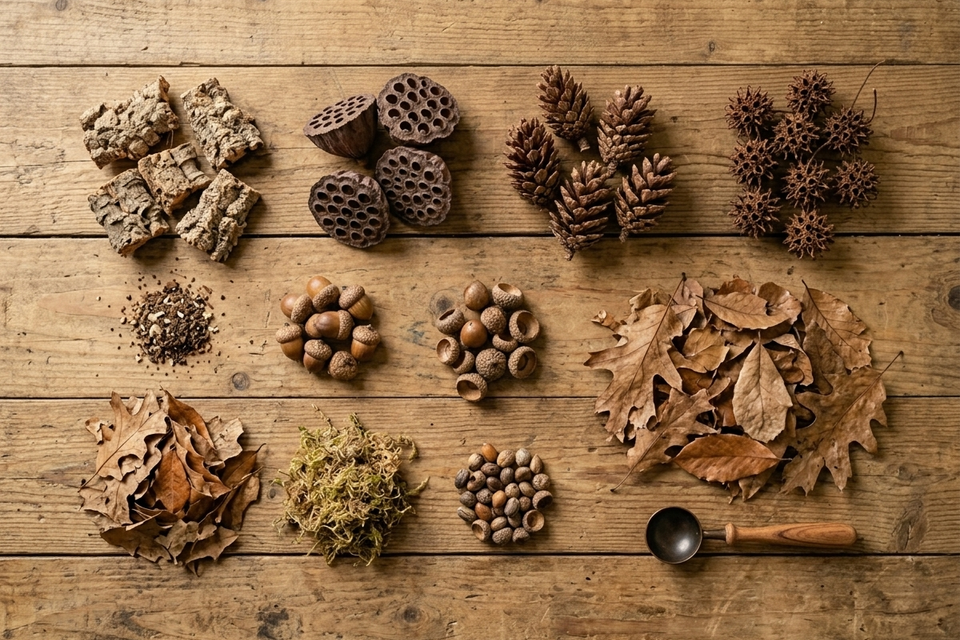
Isopods prefer environments with plenty of cover. Botanicals such as lotus pods, magnolia pods, sweet gum pods, cork bark, and dried leaves help create small hiding spots throughout the terrarium. These spaces allow isopods to feel secure, gather in groups, molt, and avoid open exposed areas.A bioactive terrarium with no cover can feel too bare for isopods and may limit their activity. Adding layers of botanicals gives the enclosure more depth and helps your cleanup crew settle into the habitat more comfortably.
Botanicals Support Natural Foraging Behavior
A healthy isopod habitat should encourage natural movement and exploration. Botanicals create different textures, surfaces, and spaces for isopods to climb over, crawl under, and investigate. This added enrichment makes the enclosure more active and more interesting to observe.As botanicals slowly break down, they also create changing foraging opportunities. Isopods will gather around leaves, pods, and softening organic material, helping them stay active while contributing to the bioactive cycle inside the terrarium.
They Help Build a Balanced Bioactive Ecosystem
Bioactive terrariums rely on natural processes to help manage waste and organic material. Isopods and springtails work together as a cleanup crew, breaking down leftover food, shed skin, decaying plant matter, and other debris. Botanicals support this process by adding organic material that becomes part of the enclosure’s ecosystem.As botanicals decompose, they help feed microorganisms, fungi, springtails, and isopods. This creates a more complete habitat that functions more like a miniature ecosystem instead of a simple enclosure.
Botanicals Improve Moisture Zones
Moisture is a major part of isopod care, and botanicals can help create useful microclimates inside the terrarium. Leaves, moss, bark, and pods can hold small amounts of moisture and provide shaded areas where isopods can retreat when they need higher humidity.Different botanicals also help break up the enclosure into areas with slightly different conditions. This gives your isopods the ability to choose where they feel most comfortable, which is important for hydration, molting, and overall colony health.
They Add Texture and Visual Appeal
A bioactive terrarium should look natural and engaging, and botanicals are one of the easiest ways to improve the appearance of the habitat. Leaf litter, pods, bark, and moss add color, texture, and dimension to the enclosure, making it feel more complete and realistic.For display terrariums, botanicals can make the habitat look more polished while still serving a practical purpose. They help create a natural forest-floor style environment that benefits both the animals inside and the overall design of the setup.
Common Botanicals for Isopod Habitats
There are many types of botanicals that can be used in isopod enclosures and bioactive terrariums. Popular options include leaf litter, cork bark, lotus pods, magnolia pods, sweet gum pods, seed pods, and moss. Each material adds something different to the habitat, from hiding spaces to feeding surfaces to natural texture.When choosing botanicals, it is important to use safe, clean materials intended for terrarium or isopod use. Avoid collecting random outdoor materials unless you know they are safe and properly prepared, since untreated items may contain pesticides, pests, mold, or contaminants.
How Often Should You Add Botanicals?
Botanicals break down over time, especially in active isopod colonies. As your cleanup crew feeds, hides, and moves through the enclosure, leaves and pods may become softer, smaller, or partially decomposed. This is a normal and healthy part of the bioactive process.Check your enclosure regularly and add more botanicals as needed. If leaf litter is disappearing quickly or your colony is growing, replenishing dry goods can help keep the habitat balanced and give your isopods enough material to forage and hide.
Build a Better Bioactive Terrarium With Isopod B&B
Botanicals are a simple but powerful way to improve your isopod habitat and support a thriving bioactive terrarium. By adding leaf litter, pods, bark, moss, and other natural dry goods, you can create a healthier, more enriching environment for your cleanup crew.Isopod B&B offers isopod supplies, botanical dry goods, substrate, starter packs, and habitat essentials for keepers who want to build better bioactive enclosures. Explore our online shop to find natural supplies that help your isopods forage, hide, and thrive.